Currency
 AED
AED
 AFN
AFN
 AMD
AMD
 ANG
ANG
 AUD
AUD
 AWG
AWG
 AZN
AZN
 BAM
BAM
 BBD
BBD
 BDT
BDT
 BIF
BIF
 BND
BND
 BOB
BOB
 BSD
BSD
 BWP
BWP
 BZD
BZD
 CAD
CAD
 CDF
CDF
 CHF
CHF
 CNY
CNY
 CRC
CRC
 CVE
CVE
 CZK
CZK
 DJF
DJF
 DKK
DKK
 DOP
DOP
 EGP
EGP
 ETB
ETB
 EUR
EUR
 FJD
FJD
 FKP
FKP
 GBP
GBP
 GMD
GMD
 GNF
GNF
 GTQ
GTQ
 GYD
GYD
 HKD
HKD
 HNL
HNL
 HUF
HUF
 IDR
IDR
 ILS
ILS
 ISK
ISK
 JMD
JMD
 JPY
JPY
 KES
KES
 KGS
KGS
 KHR
KHR
 KMF
KMF
 KYD
KYD
 KZT
KZT
 LAK
LAK
 LBP
LBP
 LKR
LKR
 MAD
MAD
 MDL
MDL
 MKD
MKD
 MMK
MMK
 MNT
MNT
 MOP
MOP
 MUR
MUR
 MVR
MVR
 MWK
MWK
 MYR
MYR
 NGN
NGN
 NIO
NIO
 NPR
NPR
 NZD
NZD
 PEN
PEN
 PGK
PGK
 PHP
PHP
 PKR
PKR
 PLN
PLN
 PYG
PYG
 QAR
QAR
 RON
RON
 RSD
RSD
 RWF
RWF
 SAR
SAR
 SBD
SBD
 SEK
SEK
 SGD
SGD
 SHP
SHP
 SLL
SLL
 STD
STD
 THB
THB
 TJS
TJS
 TOP
TOP
 TTD
TTD
 TWD
TWD
 TZS
TZS
 UAH
UAH
 UGX
UGX
 USD
USD
 UYU
UYU
 UZS
UZS
 VND
VND
 VUV
VUV
 WST
WST
 XAF
XAF
 XCD
XOF
XPF
XCD
XOF
XPF
 YER
YER

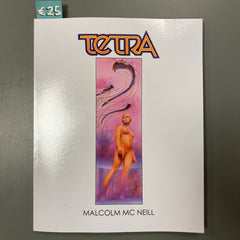

Description
xBy Malcom McNeill. Published by Stalking Horse Press.
Softcover, 134 pages, Colour, 2018 (originally published 1977-1979)
This is the first time that the prototypical graphic novel—written and illustrated in a wild period for New York’s Gallery magazine between 1977-79—has been collected, and presented in full color with a new introduction and afterword by its creator. These essays contextualize the unique experimentalism of Tetra in theme, style, and production. Originally suggested as a Star Wars pastiche complete with space opera trappings and messianic tendencies, Mc Neill always had a different idea.
Tetra is a visionary, surreal visual narrative, presaging a number of later science fiction tropes, and emerged from the context of Mc Neill’s suppressed collaboration with William S. Burroughs, Ah Pook Is Here. It coincides with the emergence of Heavy Metal magazine, and the exploitation of the science fiction boom. The unusual pretext and the challenges of creating and selling such an irreverant strip are detailed inside, along with archival production sketches, costumes, and concept art.
Malcolm Mc Neill worked as a political artist for The New York Times, cover artist for Marvel Comics, and title sequence designer for Saturday Night Live. His images have been exhibited in London, New York and Los Angeles. As a Director, he won numerous awards including an Emmy, and was introduced at the Broadcast Design Awards in 1991 as “…the man probably responsible for the most imitated [television] design style of the 1980s”.


- Choosing a selection results in a full page refresh.