Currency
 AED
AED
 AFN
AFN
 AMD
AMD
 ANG
ANG
 AUD
AUD
 AWG
AWG
 AZN
AZN
 BAM
BAM
 BBD
BBD
 BDT
BDT
 BIF
BIF
 BND
BND
 BOB
BOB
 BSD
BSD
 BWP
BWP
 BZD
BZD
 CAD
CAD
 CDF
CDF
 CHF
CHF
 CNY
CNY
 CRC
CRC
 CVE
CVE
 CZK
CZK
 DJF
DJF
 DKK
DKK
 DOP
DOP
 EGP
EGP
 ETB
ETB
 EUR
EUR
 FJD
FJD
 FKP
FKP
 GBP
GBP
 GMD
GMD
 GNF
GNF
 GTQ
GTQ
 GYD
GYD
 HKD
HKD
 HNL
HNL
 HUF
HUF
 IDR
IDR
 ILS
ILS
 ISK
ISK
 JMD
JMD
 JPY
JPY
 KES
KES
 KGS
KGS
 KHR
KHR
 KMF
KMF
 KYD
KYD
 KZT
KZT
 LAK
LAK
 LBP
LBP
 LKR
LKR
 MAD
MAD
 MDL
MDL
 MKD
MKD
 MMK
MMK
 MNT
MNT
 MOP
MOP
 MUR
MUR
 MVR
MVR
 MWK
MWK
 MYR
MYR
 NGN
NGN
 NIO
NIO
 NPR
NPR
 NZD
NZD
 PEN
PEN
 PGK
PGK
 PHP
PHP
 PKR
PKR
 PLN
PLN
 PYG
PYG
 QAR
QAR
 RON
RON
 RSD
RSD
 RWF
RWF
 SAR
SAR
 SBD
SBD
 SEK
SEK
 SGD
SGD
 SHP
SHP
 SLL
SLL
 STD
STD
 THB
THB
 TJS
TJS
 TOP
TOP
 TTD
TTD
 TWD
TWD
 TZS
TZS
 UAH
UAH
 UGX
UGX
 USD
USD
 UYU
UYU
 UZS
UZS
 VND
VND
 VUV
VUV
 WST
WST
 XAF
XAF
 XCD
XOF
XPF
XCD
XOF
XPF
 YER
YER

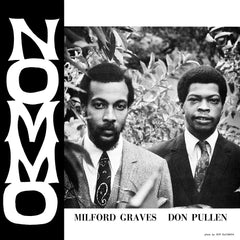

Description
xThe late percussionist Milford Graves was one of the most unique artists the world has ever seen. Born in Jamaica, Queens in 1941, he began his career in the early '60s as a part of New York's vibrant Latin jazz scene. His focus quickly turned inward, shifting towards a practice that explored the very nature of self. From his work in the New York Art Quartet and collaborations with Albert Ayler, Sonny Sharrock and more to his important contributions during NYC's loft era – he is, simply put, free jazz royalty.
In April 1966, the duo of Graves and pianist Don Pullen played at Yale University. As John Corbett writes in the liner notes, "This performance was something of a turning point for Graves. Until then he had been working in other people's bands or collective ensembles. He was phenomenally busy. In 1965 alone, he recorded with NYAQ (two LPs), Giuseppi Logan Quartet, Paul Bley Quintet and Lowell Davidson Trio, and he made his first recording released under his own name, Percussion Ensemble. Every one of these is important in its own way, but none of them quite anticipate how radical was the music that he and Pullen would unleash that evening in New Haven."
Originally released on the artists' own Self-Reliance Program label, this legendary one-night performance would be split into two volumes: In Concert At Yale University and Nommo. While rooted in African rhythms, Graves' music has its own sense of time. As the drummer stated in a 1966 DownBeat interview, "Time was always there, and the time I see is not the same as what man says time is. It works by impulsion."
- Choosing a selection results in a full page refresh.